Mathematics Major (BA, BS)

As a mathematics major, you’re trained to draw connections between math and other disciplines so you can analyze problems and relationships in a creative and logical manner. Built on the strength of rigorous courses, the math program gives you the flexibility to direct a path of study compatible with your interests and career goals.
Career Paths
Mathematics is a powerful tool that prepares you for diverse careers. Our graduates are working as business analysts, engineers, data analysts, actuaries, financial analysts, teachers, and other math-related careers. Check out profiles of some of our recent graduates:
- Megan Mange is a Systems Engineer at Boeing Corporation in St. Louis.
- Sean Jackson is a Senior Life Actuary at USAA in Atlanta, Ga.
- Maria Sumner is a Technical Program Manager at Meta (Facebook) in Seattle, Wash.
- Matt Short is a Business Intelligence Analyst at Oracle Cerner in Kansas City.
- Sandy Peterson is a Mathematical Statistician for the US Census Bureau in Washington, D.C.
- Justin Corcoran is a Math Teacher at Smithville High School.
Many of our alumni pursue graduate work in math or a related field before entering the workplace.
- Dr. Katherine Maxwell completed her PhD in Mathematics at the University of Minnesota and is now a Postdoctoral Fellow at the Max Planck Institute for Mathematics in Bonn, Germany.
- Dr. Benjamin Braun completed his PhD in Mathematics at Washington University and is now a Professor of Mathematics at the University of Kentucky.
- Dr. John Schneider completed his PhD in Economics at the University of Illinois at Urbana-Champaign and is now Quantitative User Experience Researcher at (Meta) Facebook.
- Dr. Melissa McAninch completed her MAE degree at Truman State and her PhD in Mathematics Education at the University of Iowa. She is now an Associate Professor of Education at Central College in Iowa.
- Courtney Cisler completed her Master’s of Architecture at the University of Oregon and is now Architectural Associate at Flad Architects in Madison, Wis.
Read more about what some of our other math alumni are doing!
Interested in becoming a math teacher?
If you’re interested in becoming an educator at the K-12 level, you can take pre-professional courses as an undergraduate in pursuit of a Master of Arts in Education. For details, see Truman’s Master of Arts in Education: Specialty Area Requirements for Mathematics Education.
Featured Courses
Student Opportunities
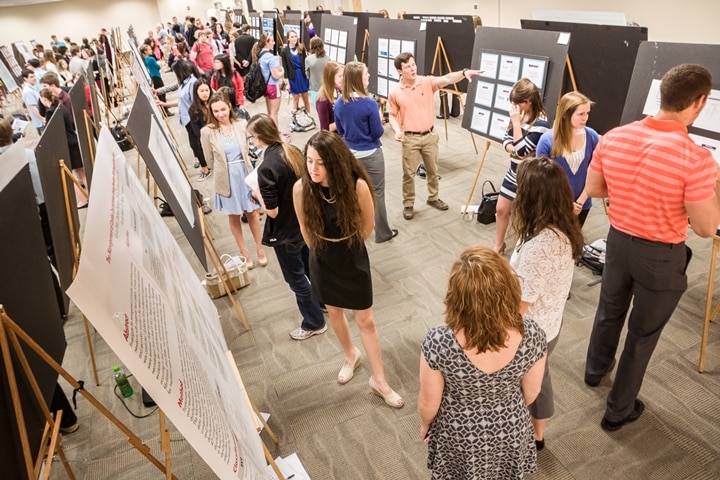
Research
You can obtain credit and research experience by participating in a recognized national undergraduate research program in mathematics such as an REU site or in one of several research programs in mathematics sponsored by Truman.
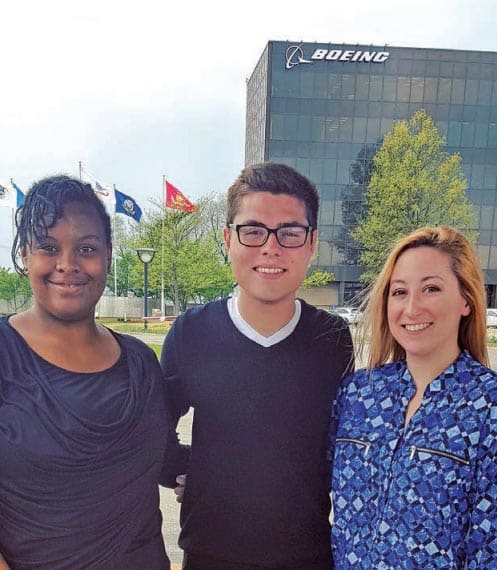
Internships for Math Students
As part of the Future Leaders in Thought and Experience (FLITE) program, a partnership with The Boeing Company, first-year students have an opportunity to gain experience with the aerospace company.
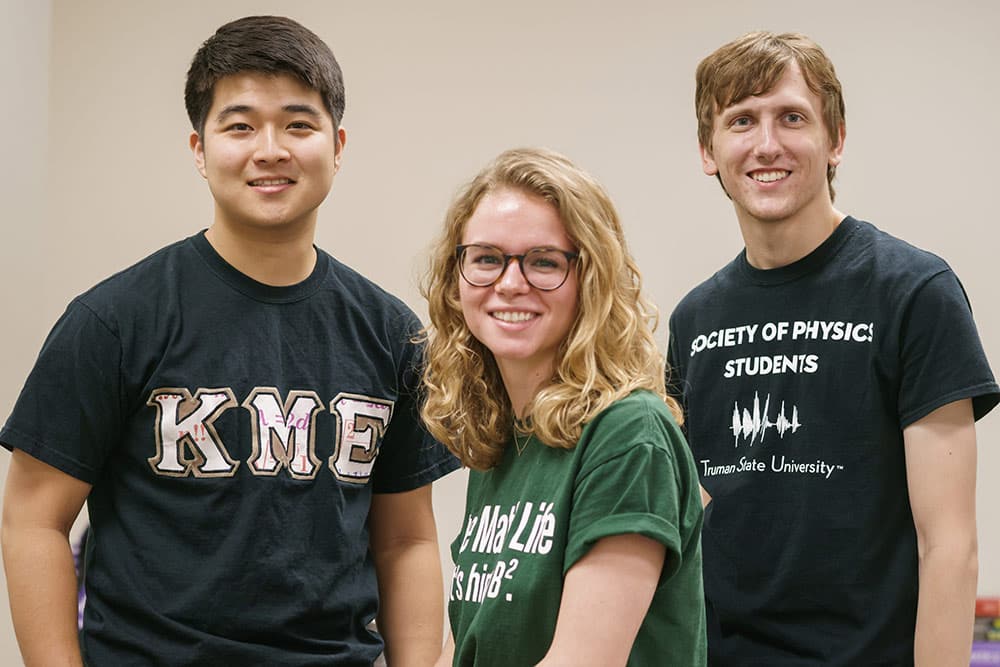
Student Organizations
Some of the organizations popular with math students include Mathematical Association of America, Kappa Mu Epsilon (KME), Society of Actuaries at Truman State University, and the Mathematics and Science Secondary Education organizations.
Explore Related Programs
Minors
Graduate Studies